
NBA News
Warriors Beat Wizards 125-117, Steve Kerr Hits 600 and Joins Rare Air

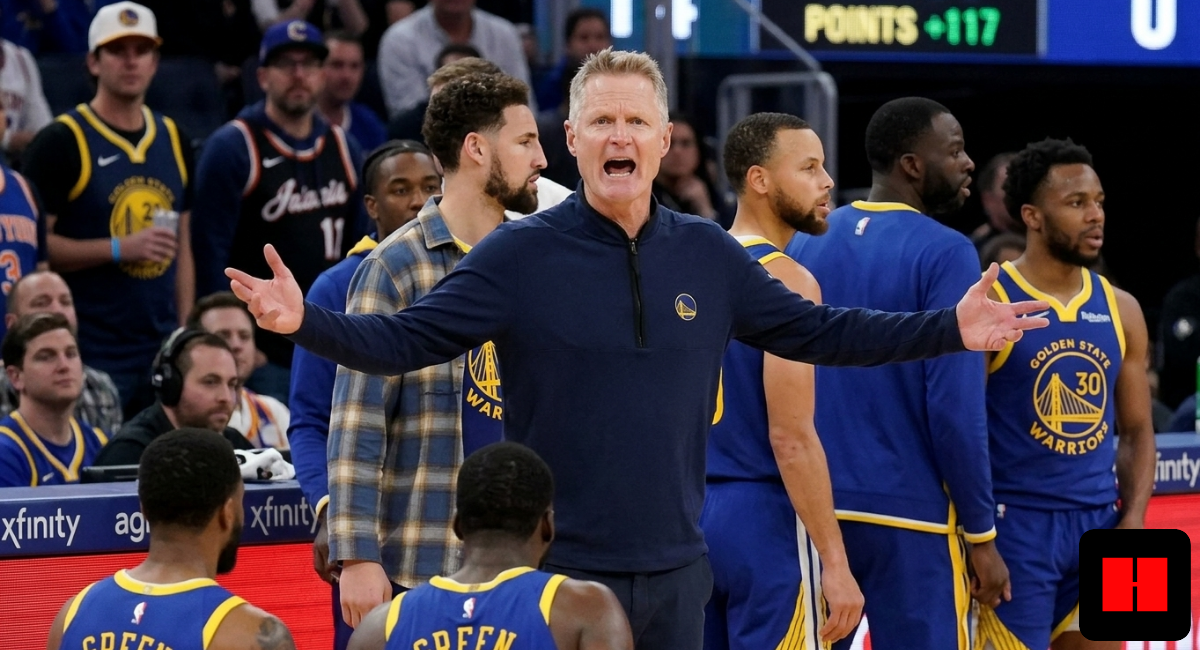
Game Recap: SAN FRANCISCO – The score said business as usual. The moment said something bigger.
The Golden State Warriors handled the Washington Wizards 125-117 on Monday night, but the headline wasn’t the box score. It was Steve Kerr walking off with win No. 600 and yeah, that puts him in a club that barely exists.
Golden State never really let this one get weird. A couple mini runs from Washington, sure. But every time it hinted at a game, the Warriors answered. Ball popped. Threes fell. The usual script.
And somewhere between the second-half push and the final buzzer, Kerr hit a number only a handful of coaches ever sniff.
What 600 Wins Actually Means
Fast company. No filler.
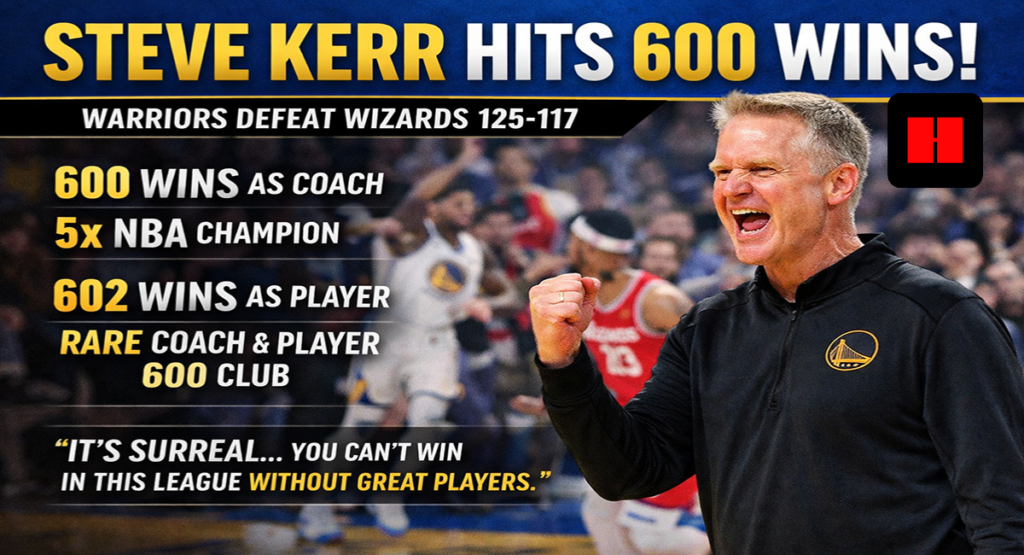
Kerr got there in 943 games. That’s moving. Only Phil Jackson, Pat Riley and Gregg Popovich did it quicker. That’s not a list, that’s a Mount Rushmore.
And here’s the wild part. Kerr isn’t just a coach with 600. He’s also got 600-plus as a player. Rings with the Chicago Bulls. Rings with the San Antonio Spurs. Now this on the sideline. Different eras, same winning DNA.
You don’t stumble into that.
Kerr’s reaction? Pretty on-brand
“It’s surreal,” Kerr said, then quickly pivoted. Credit the players. Always. He’s said it for years and he’s not wrong.
“You can’t win in this league without great players,” he added. “I was blessed from day one.”
That’s not coach-speak. That’s reality.
The Talent Question And Why Kerr Keeps Bringing It Up
You don’t stack wins without stars
Look, nobody racks up 600 in a vacuum. Kerr walked into a situation with elite pieces and kept it humming. That matters.
Dynasty runs aren’t just about schemes. It’s shot-making, spacing, switch ability, all the buzzwords but also dudes who can flat-out hoop. The Warriors have had that for years.
And Kerr knows it.
He basically said the quiet part out loud: sustained talent is rare. When you have it, you better cash in. He did. Repeatedly.
Why this still counts
There’s always someone ready to slap an asterisk on success. “Anyone could win with that roster.” Sure. Then why don’t they?
Managing egos, injuries, slumps, playoff adjustments, locker room moods that’s the job. Kerr’s done it at a high level for a long time. The win total backs it up.
Where This Puts Kerr Historically
Not just rings anymore
Kerr’s résumé was already loud. Championships, 50-win seasons like clockwork, a system that changed how teams play.
But 600 hits different. It’s longevity. It’s consistency. It’s showing up every season and stacking wins without falling off a cliff.
And doing it fast? That’s the separator.
Can he climb higher?
Depends how long he sticks around. The names ahead of him didn’t just win they stayed forever. If Kerr keeps coaching and the Warriors don’t crater, more milestones are coming. Simple math.
But even if he stopped tomorrow? This one sticks.







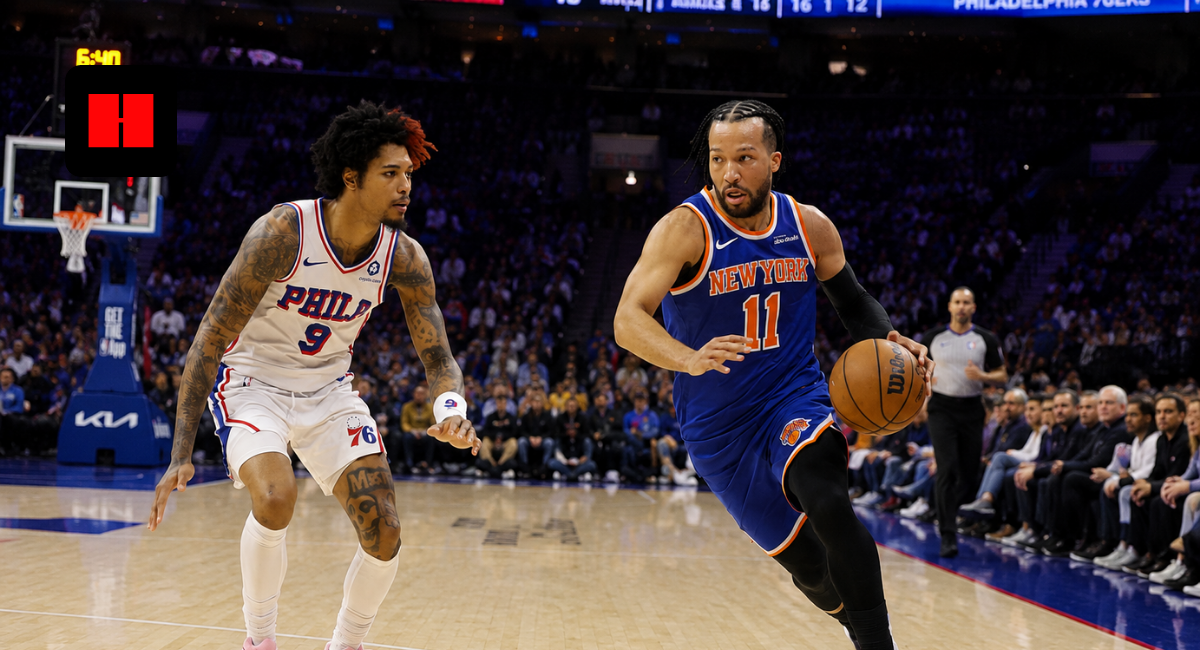
Game Recap: The crowd inside Wells Fargo Center sounded confused by the end of it. Half boos. Half Knicks chants. A whole lotta panic.
And yeah, the Sixers are cooked unless something wild happens fast.
Jalen Brunson shook off an ugly first half, caught fire when the game tightened up, then slammed the door on Philadelphia in the fourth as the Knicks rolled to a 109-94 win Friday night, pushing New York one step from another Eastern Conference finals trip.
Brunson dropped 33. Same story, different night
The Sixers had the building rocking early. Paul George looked aggressive out of the gate. Joel Embiid gutted through the ankle and hip issues. Philly led by 12 at one point and finally looked alive in the series.
Didn’t matter.
New York defended like maniacs over the final 15 minutes. Brunson started hunting switches. Josh Hart crashed everything in sight. Mikal Bridges hit cold-blooded midrange buckets. Then the Nova guys buried Philly right in front of those old Villanova championship banners hanging overhead.
That part had to sting.
Jalen Brunson Does the Superstar Thing Again
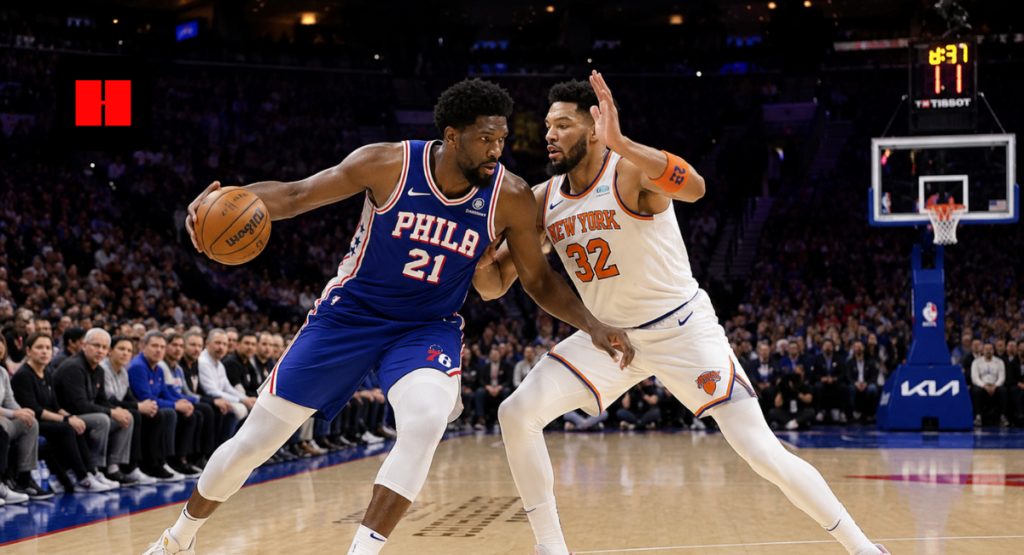
Slow start? Didn’t last long
Brunson opened the night 2-for-8 and looked a little sped up against Philadelphia’s traps and hard hedges. By the fourth quarter he was back doing Brunson stuff, shoulder bumps, footwork, hesitation dribbles, defenders spinning the wrong way.
Bucket getter behavior.
He finished with 33 points on 11-of-22 shooting and controlled the game late without forcing much. The killer sequence came midway through the fourth after Philly had cut it to four.
Hart scored. Bridges scored. Then Brunson walked into a top-of-the-key three and splashed it clean for a 95-86 lead while Knicks fans lost their minds behind the bench.
Ballgame.
Mike Brown, in his first postseason run coaching New York after replacing Tom Thibodeau, basically admitted Brunson keeps everybody sane.
“I’m Linus. Jalen’s my blanket,” Brown said afterward.
Honestly? Fair quote. Brunson has been New York’s bailout button all spring.
The Nova Knicks Took Philly’s Heart
Villanova reunion turns nasty for Sixers
This series keeps turning into a Villanova alumni showcase with a side of violence.
Bridges poured in 23 points and kept punishing smaller defenders in the mid-post. Hart added another junkyard double-double,12 points, 11 rebounds, loose balls everywhere, talking trash after half the possessions.
And when Quentin Grimes hit back-to-back threes early in the fourth to trim the Knicks lead to 88-84, it felt like Philly finally had a pulse.
Nope.
Hart and Bridges answered immediately. Brunson followed with the dagger triple. A 9-0 burst and the Sixers never recovered.
That’s what contenders do. Quick strike. No drama.
What Happened to Paul George?
First-quarter explosion, then absolute silence
George scored 15 in the opening quarter and looked ready to carry Philly for a night. Then the Knicks clamped the perimeter and he vanished.
Seriously vanished.
After the first quarter, George went scoreless and missed his final nine shots. Didn’t get to the free-throw line once. Tyrese Maxey didn’t either. That’s malpractice against a Knicks defense already loading the paint against Embiid.
New York’s physicality changed everything. Bridges crowded George’s handle. Hart bodied wings on switches. Mitchell Robinson erased second chances around the rim.
The Sixers generated almost no downhill pressure late. Too much standing around. Too many bailout jumpers.
Nick Nurse kept searching for answers. Never really found one.
Joel Embiid Returned, But Philly Still Looks Stuck
Can the Sixers realistically come back?
Embiid returned after missing Game 2 with a sprained ankle and sore hip, finishing with 18 points while clearly laboring through stretches. He battled. Nobody can question that.
But the version Philly got Friday wasn’t the monster who flipped the Celtics series earlier in the postseason.
The burst wasn’t there consistently. Knicks defenders crowded him on catches. Double teams came fast. Sometimes he settled. Sometimes he just looked exhausted.
Nick Nurse said Embiid “gave us everything he could.”
Probably true.
Problem is, New York has more healthy bodies, more two-way wings and way more confidence right now.
Coming back from 3-0? Against this defense? Against Brunson playing like a top-five playoff guard? Good luck.
Knicks Winning Without OG Anunoby Is Scary
Depth showing up at the perfect time
OG Anunoby missed the game with a strained right hamstring, and somehow the Knicks still looked deeper and more connected late.
That should terrify the East.
Landry Shamet, who barely registered this postseason before Friday, came off the bench firing and dropped 15 huge points. His third-quarter three stretched the lead and kept momentum from flipping completely.
Meanwhile the Knicks continue stacking wins with defense, offensive rebounding and fourth-quarter execution. They’ve now won six straight playoff games and look more comfortable every round.
Brown even admitted afterward he’s starting to see championship potential in this group.
Hard to laugh that off anymore.
The Crowd Was Pure Chaos
Knicks fans took over Philly again
Joel Embiid begged Sixers fans before the series not to sell tickets to Knicks fans.
Yeah. That didn’t work.
Spike Lee showed up. Ben Stiller too. Timothée Chalamet got up applauding Knicks buckets like he was courtside at MSG. Every big New York run turned the arena into a split crowd full of cheers, boos and some very Philly middle fingers.
By the fourth quarter, it sounded more nervous than hostile.
That’s never a good sign in May.
What’s Next?
Game 4 shifts back to Philadelphia on Sunday, and the Sixers are staring at elimination. Nobody in NBA history has come back from a 3-0 deficit in a playoff series.
The Knicks? They’re one win away from back-to-back conference finals appearances and suddenly looking like a real problem for Boston, Cleveland or anybody else left standing in the East.
Brunson keeps cooking. Hart keeps flying around like a lunatic. Bridges keeps punishing mismatches.
And Philly keeps running out of answers.
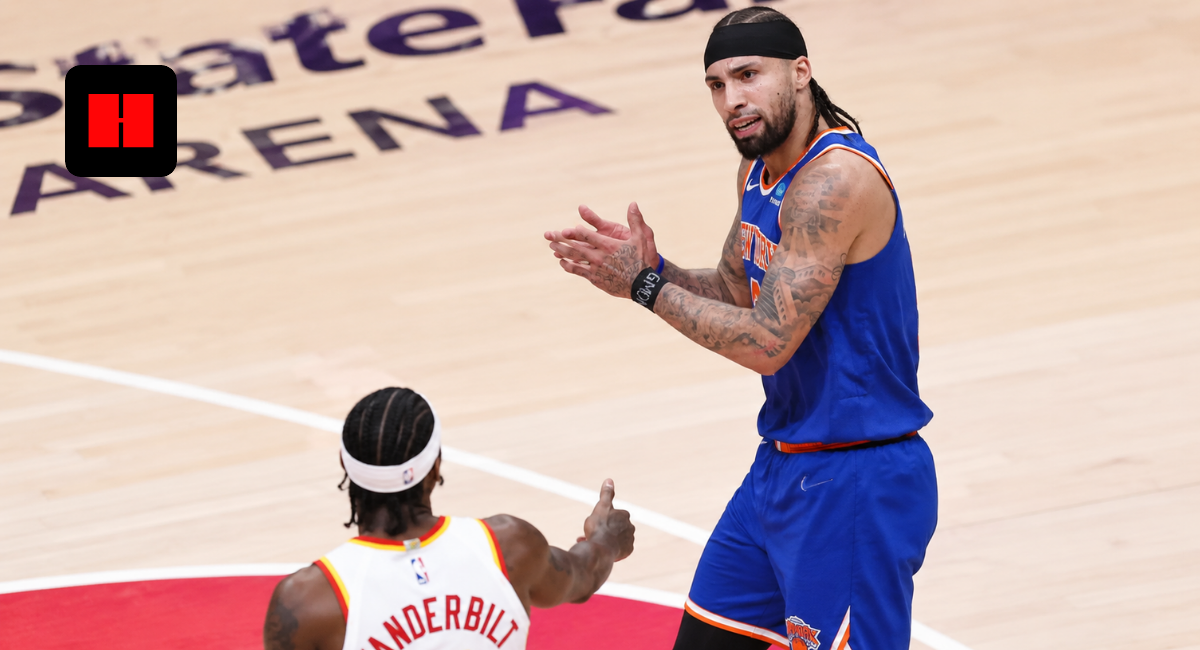
Game Recap: The scoreboard said the series was tight. The legs said otherwise.
New York walked out of Game 2 up 2-0 on the New York Knicks and the bigger story wasn’t some tactical chess match or superstar takeover. It was attrition. Pure playoff wear-and-tear. The kind that shows up in short jumpers, late closeouts and dudes bending over at the scorer’s table midway through the fourth.
The Philadelphia 76ers emptied the tank surviving a seven-game war with the Boston Celtics in Round 1. You could see it immediately in Game 1 against New York. Philly came out looking half-awake, missed rotations everywhere, transition defense cooked from the opening tip. Madison Square Garden smelled it early and never let go.
Game 2 had more fight. Tyrese Maxey pushed the tempo. Joel Embiid bullied switches for stretches. Didn’t matter late. The Knicks had bodies. Fresh ones, too.
That’s the series right now.
Why the Knicks’ Bench Keeps Winning the Series
Depth sounded boring in January. Looks pretty damn important in May.
Leon Rose spent the whole season stacking playable guys like he was preparing for a two-month street fight. And now the Knicks are cashing every one of those chips.
Landry Shamet and Malcolm Brogdon Changed the Second Unit
A lot of teams stop tweaking the roster after free agency. New York kept going.
They brought back Landry Shamet in September. Added Malcolm Brogdon for another steady ball-handler. Earlier in the summer they chased Jordan Clarkson, signed Guerschon Yabusele after that Olympic heater, then drafted Mohamed Diawara.
And that was before the trade deadline.
Rose grabbed Jose Alvarado for two second-round picks. Sneaky move at the time. Looks massive now. The guy’s been a chaos demon defensively, hounding ball-handlers 94 feet and sparking runs when the offense stalls out.
Meanwhile Miles McBride keeps giving them real minutes. Mitchell Robinson changes possessions with offensive boards alone. Even third-string big Ariel Hukporti has held up when called.
That’s the difference. New York loses one guy, another playable rotation piece slides right in.
No panic. No emergency lineups.
What Went Wrong With Philadelphia’s Roster?
The Sixers went the other direction and it’s blowing up in their face.
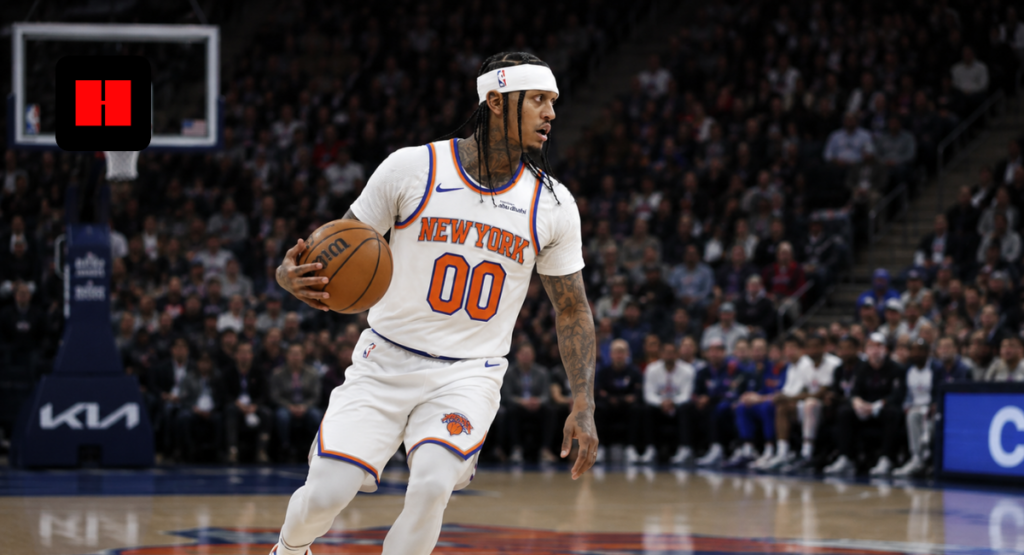
Trading Jared McCain Hurt More Than Philly Expected
Philadelphia spent the second half of the year trimming salary and collecting future assets. On paper? Fine. In reality? They gutted their guard depth before the playoffs.
Moving Jared McCain for picks looked defensible at the deadline if you squinted hard enough. But playoff basketball exposes every weak spot. McCain was one of the few secondary creators on the roster who could actually juice bench offense.
Now he’s in Oklahoma City knocking down triples and looking comfortable in big moments while Philly’s reserve unit can barely buy a bucket.
That stings.
The Thunder guard finished the regular season averaging 10.4 points with a 57 percent effective field goal mark after the trade. Better numbers than he posted in Philly. And Tuesday night he drilled four threes by himself. The Sixers’ bench has made five total in this series.
Five.
The Kyle Lowry Problem
This isn’t disrespect. Kyle Lowry has had a hell of a career.
But asking 40-year-old Lowry to stabilize playoff possessions in 2026 against New York’s perimeter pressure? That’s rough business. The legs aren’t there every night. Sometimes the burst disappears completely by the second half.
Then Philly cut Cameron Payne right before the playoffs because of the hamstring issue. Short-sighted move. Payne’s got 72 playoff games on his résumé and probably would’ve been available by the time the Boston series wrapped.
Instead, Nick Nurse is digging deep into lineups he clearly doesn’t trust.
You can see it in the minute totals.
Tyrese Maxey Looks Gassed
This part isn’t complicated.
Tyrese Maxey led the league at 38 minutes per game during the regular season. That number climbed over 40 in the postseason. He carried Philly through stretches against Boston, erupted off high pick-and-rolls, punished drop coverage, lived in the paint.
Now? The burst looks inconsistent.
Some possessions he still gets downhill and cooks defenders. Other trips he’s settling for tough pull-ups because the legs aren’t firing the same way. Happens to every small guard logging monster playoff minutes.
And New York keeps throwing fresh defenders at him. McBride. Alvarado. Shamet fighting over screens. Bodies everywhere.
That’s not sustainable for Philadelphia over a long series.
Can the Sixers Fix This Rotation?
Maybe. But Nurse doesn’t have many cards left.
The Sixers basically ran a playoff rotation with one-and-a-half reliable bench guys in Game 2. Four starters crossed the 40-minute mark. Again.
That’s danger territory against a Knicks team that wants games ugly and physical.
Especially if OG Anunoby misses time and New York still feels comfortable expanding roles for half the bench anyway. That says everything about roster construction.
One team prepared for playoff survival.
The other prepared for payroll flexibility.
Only one of those looks smart right now.
The Bigger Problem for Philly
This is the part Sixers fans probably don’t want to hear.
The roster issue isn’t just about this series. It’s structural.
When your stars have to drag the offense every night because there’s no trustworthy second unit behind them, eventually the defense slips. Closeouts get slower. Three-point contests disappear. Transition defense turns into jogging back and pointing fingers.
That’s where Philly is drifting.
And the Knicks? They look deeper, fresher and meaner by the game.
That usually decides playoff series before tactics ever do.
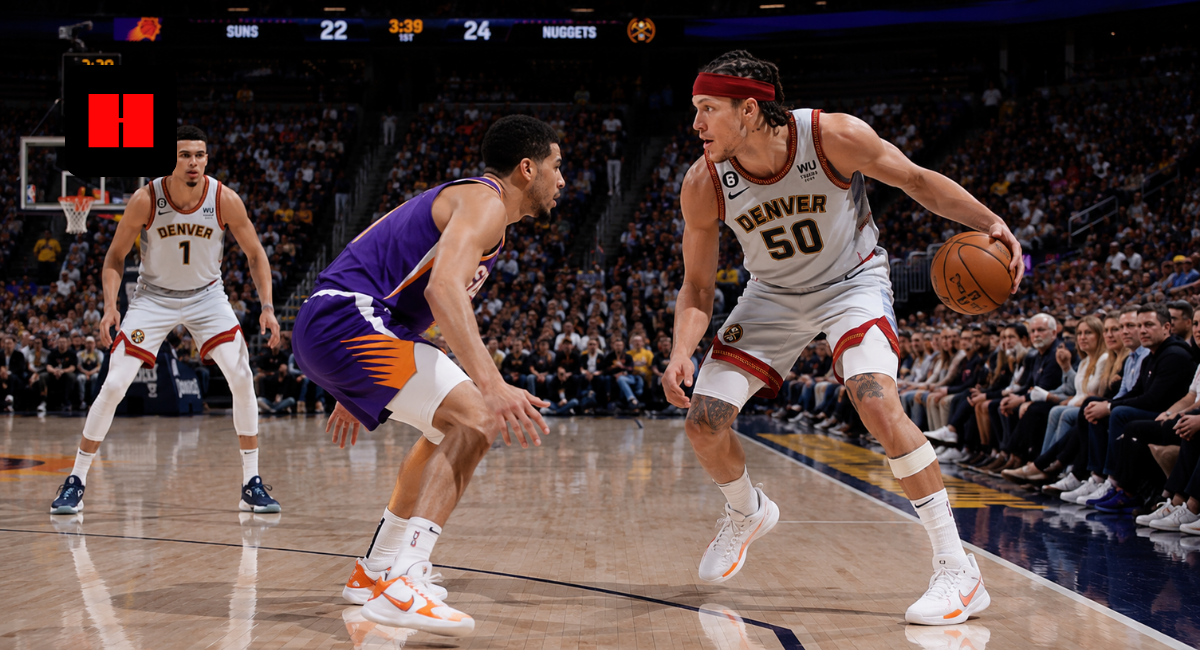
Game Recap… Sort Of: Phoenix Already Took Its Swing
They didn’t win a playoff game. Got broomed by the Oklahoma City Thunder. Still, 45 wins after a 26-win slog? That’s not nothing. That’s a jump. That’s a locker room that actually believes again.
And now this, flip half the core for Aaron Gordon?
Feels like panic dressed up as ambition.
Key Question: Do the Suns even need Gordon?
Short answer, yeah, they need size. Real size. Someone who can bang at the four, switch, finish lobs, not get bullied on the glass.
But need and overpay aren’t the same thing.
Phoenix isn’t one piece away. Not from the Thunder. Not from the new look San Antonio Spurs either. That tier is real. You don’t skip steps into that group, you grind into it.
Chemistry Check: Why mess with something that finally works?
This wasn’t some random .500 team. They built something. Slowly. Ugly at times, sure. But it held.
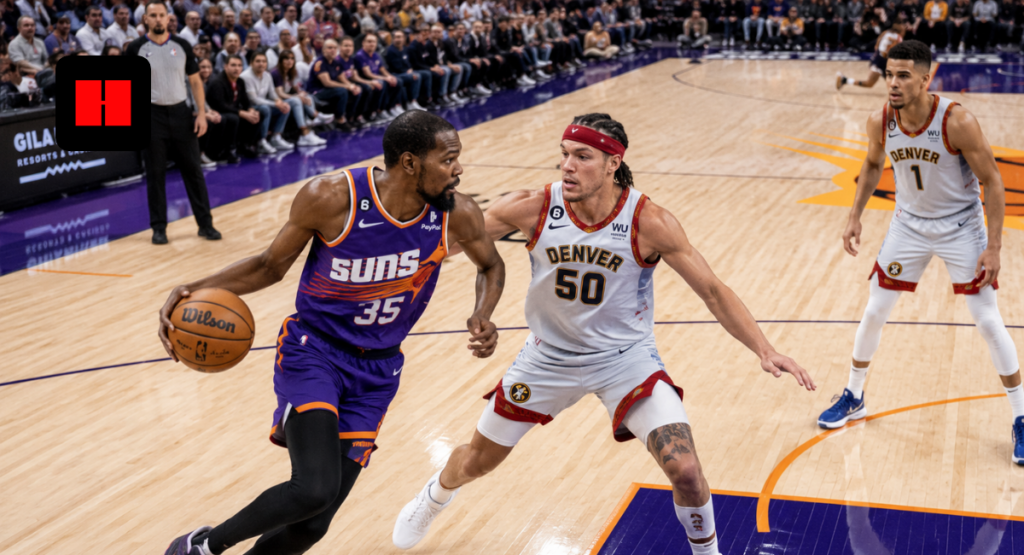
Devin Booker + Dillon Brooks: weird fit, perfect edge
Devin Booker did what he always does, bucket getter, midrange killer, quiet closer.
Dillon Brooks? Loud. Annoying. In your jersey all night. Talking. Clamping wings.
It worked. Like, actually worked. Yin-yang stuff but not corny.
You trade Brooks in a Gordon deal? You lose that bite. That identity.
Jalen Green’s timeline matters
Jalen Green is 24. Still climbing. Still figuring out when to cook and when to chill.
You include him in a deal? That’s not a tweak, that’s ripping out your ceiling.
The Young Guys: Phoenix finally has some
Rasheer Fleming’s flashes weren’t fake
Kid’s 6’9”, arms forever. Guarded everybody. And not in a “we tried him there” way, he held his own.
LeBron James.
Luka Dončić.
Jaylen Brown.
He saw those matchups. Didn’t melt.
Shot it well enough, too. Corner threes. Quick trigger. Not scared.
You don’t toss that into a deal unless you’re sure.
What about Ryan Dunn?
Ryan Dunn isn’t the same offensively. Not close. But defensively? Switchable, long, knows the system.
Cheap minutes. Useful minutes.
That matters when your stars eat the cap.
Turning Point: The lesson Phoenix already learned
They’ve been here before.
Traded Toumani Camara in that Jusuf Nurkić deal a couple years back. Needed a center. Got one. Also gave up a young wing who’s now, yeah, looking like a miss.
That one stung. Front office remembers.
You sure you want a sequel?
Front Office Reality: Western Conference isn’t forgiving
Look at the board.
- Thunder, young, deep, scary
- Spurs, rising fast, not flinching
- Everyone else? Fighting for scraps
Phoenix is in that second pack. And that’s fine, for now.
You don’t blow up a 45 win climb just to stay a 45 win team with a different name on the jersey.
Would Gordon help? Of course.
He’d dunk everything. Guard multiple spots. Be a playoff guy. No debate.
But Denver’s not giving him away. Not even close.
Denver Nuggets will ask for real stuff. Rotation players. Young assets. Picks. Probably all of it.
And that’s where this falls apart.
So what’s the move?
Honestly? The boring one.
Run it back.
Let Booker lead. Let Green grow. Let the kids fill in gaps. Add smaller pieces, rebounding, shooting, maybe another big on the margins.
Not sexy. Not headline grabbing.
But neither is gutting your depth for a move that doesn’t actually move you up.
Bottom Line: This isn’t the moment to get reckless
Hell, the Suns just got stable again. That matters more than people think.
You trade for Gordon now, you’re betting everything clicks instantly. That the West waits. That your young guys weren’t that important.
That’s a lot of bets.
And Phoenix doesn’t have that kind of margin.

Knicks Smother Sixers Again, Brunson Takes Over Late as New York Grabs 3-0 Stranglehold

Knicks Smell Blood as Sixers’ Thin Rotation Starts Cracking

Suns Chasing a Shortcut? Aaron Gordon Deal Feels Like a Trap

Shai Gilgeous-Alexander Breaks Wilt Chamberlain’s 62-Year 20-Point Streak Record

Thunder Edge Celtics 104-102 After Pritchard’s Last-Second Miss

Warriors’ Lost Season Might Force Steve Kerr Back for One More Run
-
 NBA News8 months ago
Shai Gilgeous-Alexander Breaks Wilt Chamberlain’s 62-Year 20-Point Streak Record
-
 NBA News8 months ago
Thunder Edge Celtics 104-102 After Pritchard’s Last-Second Miss
-
 NBA News8 months ago
Warriors’ Lost Season Might Force Steve Kerr Back for One More Run
-
 NBA News7 months ago
Anthony Edwards Tells Julius Randle to “Find a Balance” After Wolves Fall to Thunder
-
 NBA News7 months ago
Knicks vs. Warriors: Can Golden State Hang at the Garden With Half the Roster Missing?
-
 NBA News7 months ago
Celtics 111, Wizards 100: Queta Eats Inside as Boston Hands Washington 11th Straight Loss
-
 NBA News8 months ago
Castle’s 30-Point Triple-Double Wasted as Nuggets Rally Past Spurs
-
 NBA News8 months ago
Jaylen Brown Sounds Off on Foul Baiting After Celtics Fall to Thunder